WA Premier Mark McGowan warned Alcoa to lift its game or face curtailed mining, but his successor Roger Cook slashed water supply protections after a possibly empty threat from the US miner.
Yara plans massive Pilbara green ammonia plant by 2030
Norwegian Yara has big plans for green ammonia in WA's north while local Wesfarmers looks to build another traditional carbon-intensive facility south of Perth.
Yara plans to operate a second WA ammonia plant by 2030 using renewable electricity while Wesfarmers prepares an expansion using traditional heavily polluting gas-to-hydrogen technology.
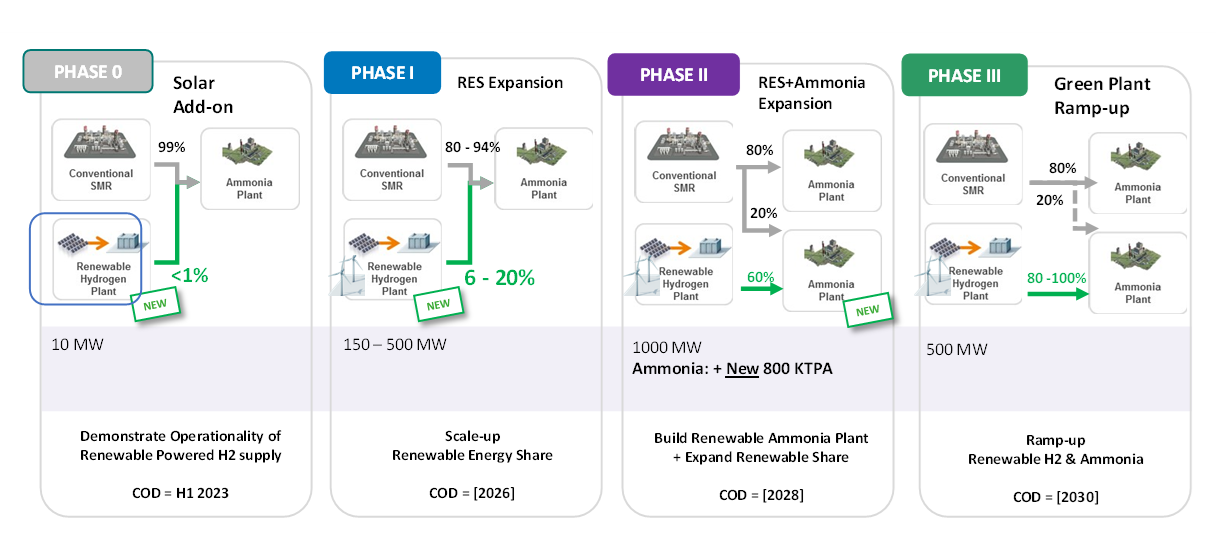
In May, the Norwegian fertiliser and ammonia giant and French energy company Engie received $42 million from the Australian Renewable Energy Agency for a demonstration project. A 10-megawatt solar-powered electrolyser will produce emissions-free hydrogen to be fed into Yara's existing plant and combined with nitrogen to produce ammonia.
The demonstration project is powered by about 20 hectares of solar panels on Yara's existing plot on the Burrup Peninsula. It will supply less than one per cent of the hydrogen that is combined with nitrogen from the air to make ammonia.
The bulk of the plant's hydrogen is currently produced by the steam methane reforming process that extracts hydrogen from gas and emits carbon dioxide. The plant emitted 1.06 million tonnes of CO2 in the 12 months to July 2020.
Yara Pilbara external relations manager Luke Blackbourn told the Pilbara Summit held in Perth last week that 150 to 500 megawatts of renewable energy and a new renewable hydrogen plant could lift the share of renewable hydrogen to up to 20 per cent by mid-decade.
This Phase 1 would be powered by renewable energy generated off the Burrup Peninsula and would require access to vast amounts of land.
Yara's plan for green ammonia in the Pilbara. Source: Yara presentation at Pilbara Summit
"If you want a large-scale development in the Pilbara, then quite clearly, you're doing that on Aboriginal countries," Blackbourn said.
"You certainly can't come in with a project that's 90 per cent engineered, and the finances lined up, and you just want to appoint a contractor and then start to do Aboriginal engagement."
Blackbourn said renewable energy developments had more flexible footprints than mining so could be reconfigured to avoid heritage sites.
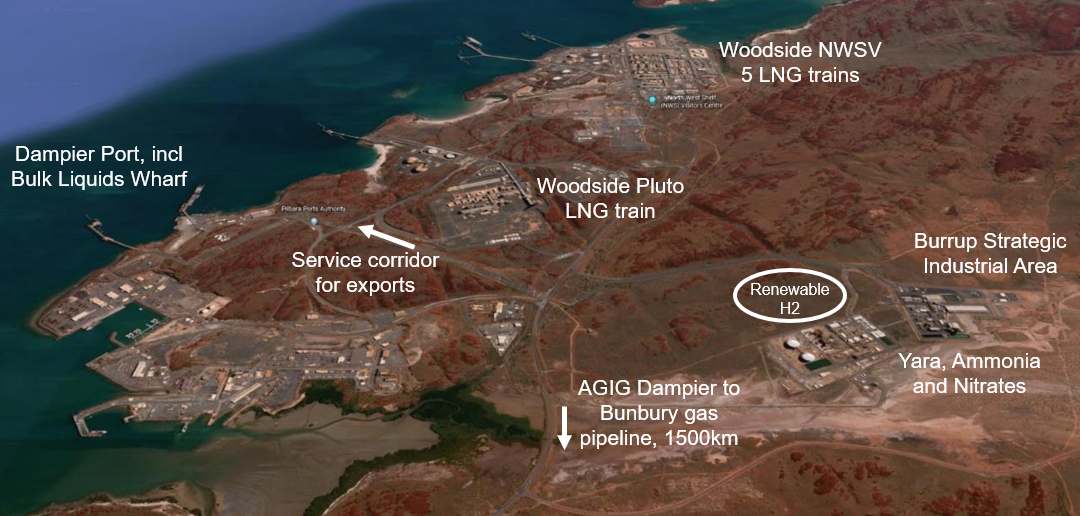
Yara is working with Horizon Power and others to develop an infrastructure corridor to bring large amounts of power onto the Burrup Peninsula. Corridor design is constrained by existing infrastructure and the surrounding World Heritage-nominated rock art.
The busy Burrup Peninsula. Source: Yara presentation at Pilbara Summit
Phase 2 would add a gigawatt of renewable energy and a new 800,000 tonnes an hour ammonia plant. Yara's current 850,000 tonnes a year ammonia plant opened in 2006 and cost $700 million.
A final Phase 3 would bring the new ammonia plant to close to 100 per cent emission-free feedstock by 2030 with an additional 500MW of solar and wind power.
Local fertiliser manufacturer Wesfarmers is also looking to expand its WA ammonia production but without renewable energy.
Technip is performing front end engineering design for the local conglomerate to build a new plant next to its existing Kwinana facility.
Wesfarmers plans to spend more than $500 million to build a traditional steam methane reforming plant.
The plant will be complete by September 2024, according to an Australian Industry Participation Plan lodged with the Federal Government.
The existing Wesfarmers plant can produce 225,000 tonnes of ammonia a year for the production of explosives, fertilisers and sodium cyanide and use nickel processing.
Wesfarmers' petrochemical facility in Kwinana emitted 800,000 tonnes of CO2 in the 12 months to June 2020.
A race for the green dollar
Blackbourn said the plan was not a done deal and had to compete with other investment options assessed in the company's headquarters in Oslo.
"It's a competition within the company" for projects across the globe wanting a capital allocation from Oslo, Blackbourn said
Blackbourn said for Yara, and other investors, the Pilbara offered proximity to markets, long term relationships into Asia, massive renewable energy potential and low sovereign risk.
Having just 60,000 people spread over half a million square kilometres was a boon for large scale renewable energy.
"We need to pursue and maintain that competitive edge," Blackbourn said. "Things are moving so rapidly…the various buckets of capital will be furiously trying to find a home."
Blackbourn said the interest in green ammonia as a clean fuel for applications like large shipping where batteries are not suitable is immense.
"This is a global opportunity and… it's absolutely a race."
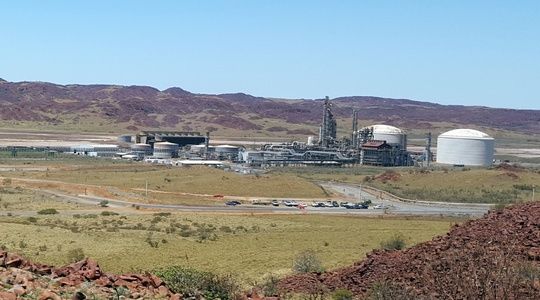
Main image: Yara Pilbara's ammonia plant. Source: Yara presentation to the Pilbara Summit.
I worked in oil & gas in commercial and engineering roles for 20 years. Since 2016, I have written for The West Australian, WAtoday, The Guardian and Boiling Cold, winning five WA Media Awards.
The shutdown of the Yara Pilbara plant comes as a quarter of global trade in ammonia, used for urea fertiliser and mining explosives, is blocked by war.
South West WA's power grid reached a record 91 per cent peak renewable energy share in December - driven by 1,225 MW of new battery storage - while wholesale power prices fell 13 per cent and carbon emissions dropped 15 per cent as coal and gas generation declined.