

Cash-poor Kimberley fracker Black Mountain expects WA decision soon
The US-owned company is seeking funds from investors to stay a going concern while it awaits state and Federal approval.
The US-owned company is seeking funds from investors to stay a going concern while it awaits state and Federal approval.

WA Premier Mark McGowan warned Alcoa to lift its game or face curtailed mining, but his successor Roger Cook slashed water supply protections after a possibly empty threat from the US miner.
UK-listed Georgina Energy plans to drill in the remote Little Great Sandy Desert in search of helium, hydrogen and natural gas.
The shutdown of the Yara Pilbara plant comes as a quarter of global trade in ammonia, used for urea fertiliser and mining explosives, is blocked by war.

EXCLUSIVE
Australia's largest ammonia plant will be shut for two months to repair damage caused by a power outage, amidst a global supply crunch for the vital fertiliser and explosives ingredient.
More than a quarter of the world's traded ammonia flows through the Strait of Hormuz, as do 43 per cent of urea shipments - the fertiliser made from ammonia.
That flow has been cut to a trickle since the United States and Israel attacked Iran, as have vital gas supplies, causing fertiliser plants in India to shut.
Yara's Pilbara plant, which uses gas to produce 850,000 tonnes of ammonia a year, suffered a power outage last week, damaging equipment.
A spokesman for the Norwegian company said workers and the environment were unaffected, and initial assessments indicated repairs could take about two months.
"Yara well understands the importance of its products to customers and will work to bring the operations back online as soon as practical," he said.
An adjacent plant, half-owned by Australia's Orica, uses 140,000 tonnes of the ammonia to make the explosive technical ammonium nitrate (TAN) for WA's mining sector.
The remaining ammonia is shipped to Australian and international customers, and much of it is used to make urea fertiliser.
 Peter Milne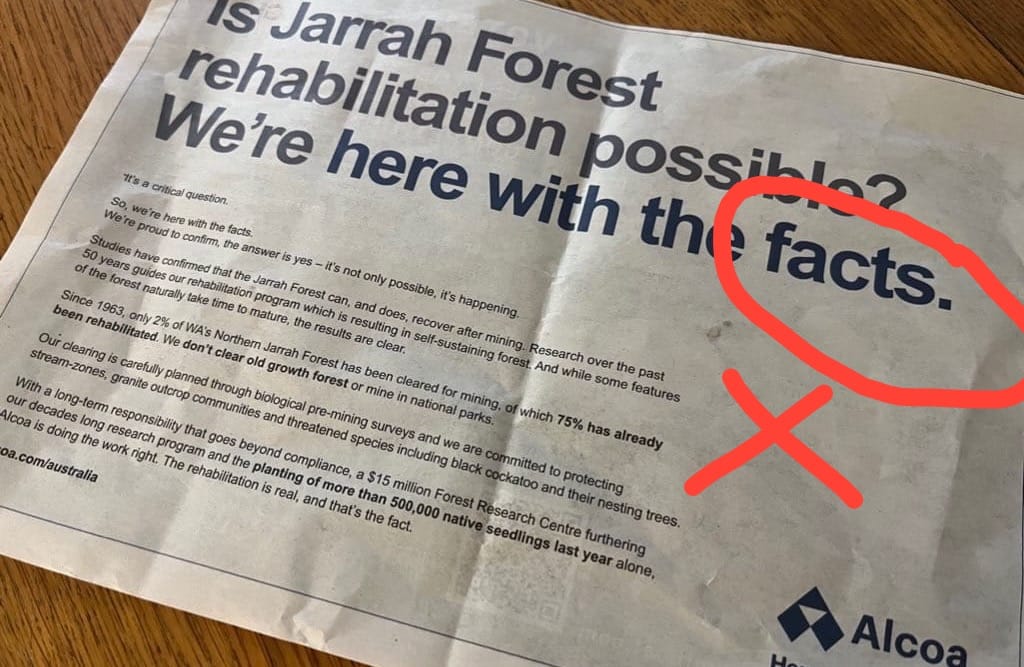
Only a week ago, Yara chief executive Svein Tore Holsether warned of the dangers of a prolonged closure of the Strait of Hormuz, which would affect the supply of fertiliser.
“If the Strait of Hormuz was closed for a year, it would be catastrophic ... you will see significant reductions in the farm yield,” he said.
“This is a regional conflict with global implications, and it goes straight into the food system.”
The shutdown in the Pilbara could not have come at a worse time for Australia's farmers, who last year imported 1.2 million tonnes of urea in April and May for use before or shortly after seeding.
Three-quarters came from the Gulf nations, where shipping is now severely curtailed after the United States and Israel attacked Iran.
Australia's largest export could also be affected.
For the next two months, WA's iron ore miners no longer have 330,000 tonnes a year of TAN produced on their doorstep. The explosive is used in vast quantities to blast rock so it can be collected, crushed and shipped to port.
The degree of disruption to production, if any, will depend on the stocks of TAN the miners hold and whether they can source other supplies at short notice.
Wesfarmers subsidiary CSBP runs WA's second-largest ammonia plant in Kwinana near Perth. CSBP uses Kwinana's 255,000 tonnes a year output and additional imported ammonia to make ammonium nitrate for fertilisers and explosives.
CSBP would not say if any of its imported ammonia came from Yara.
"It is standard business practice for us to continually monitor and manage our supply chain to ensure we meet customer demand," a company spokeswoman said.
UPDATES
23 March 2026: comments from Yara chief executive added.

The US-owned company is seeking funds from investors to stay a going concern while it awaits state and Federal approval.

WA Premier Mark McGowan warned Alcoa to lift its game or face curtailed mining, but his successor Roger Cook slashed water supply protections after a possibly empty threat from the US miner.

UK-listed Georgina Energy plans to drill in the remote Little Great Sandy Desert in search of helium, hydrogen and natural gas.

The half-sized project in WA's North West will now pursue power sales to Pilbara miners and data centres and the production of green ammonia off-site.
Every story straight to your inbox and the occasional round up of info and comment.