

Cash-poor Kimberley fracker Black Mountain expects WA decision soon
The US-owned company is seeking funds from investors to stay a going concern while it awaits state and Federal approval.
The US-owned company is seeking funds from investors to stay a going concern while it awaits state and Federal approval.

WA Premier Mark McGowan warned Alcoa to lift its game or face curtailed mining, but his successor Roger Cook slashed water supply protections after a possibly empty threat from the US miner.
UK-listed Georgina Energy plans to drill in the remote Little Great Sandy Desert in search of helium, hydrogen and natural gas.
The state-owned utility needs to replace the generation capacity it will lose by closing down all its coal-fired power stations over the next four years.

State-owned power utility Synergy is seeking planning approval for a 1.5-gigawatt renewable energy farm near Carnamah, a three-hour drive north of Perth.
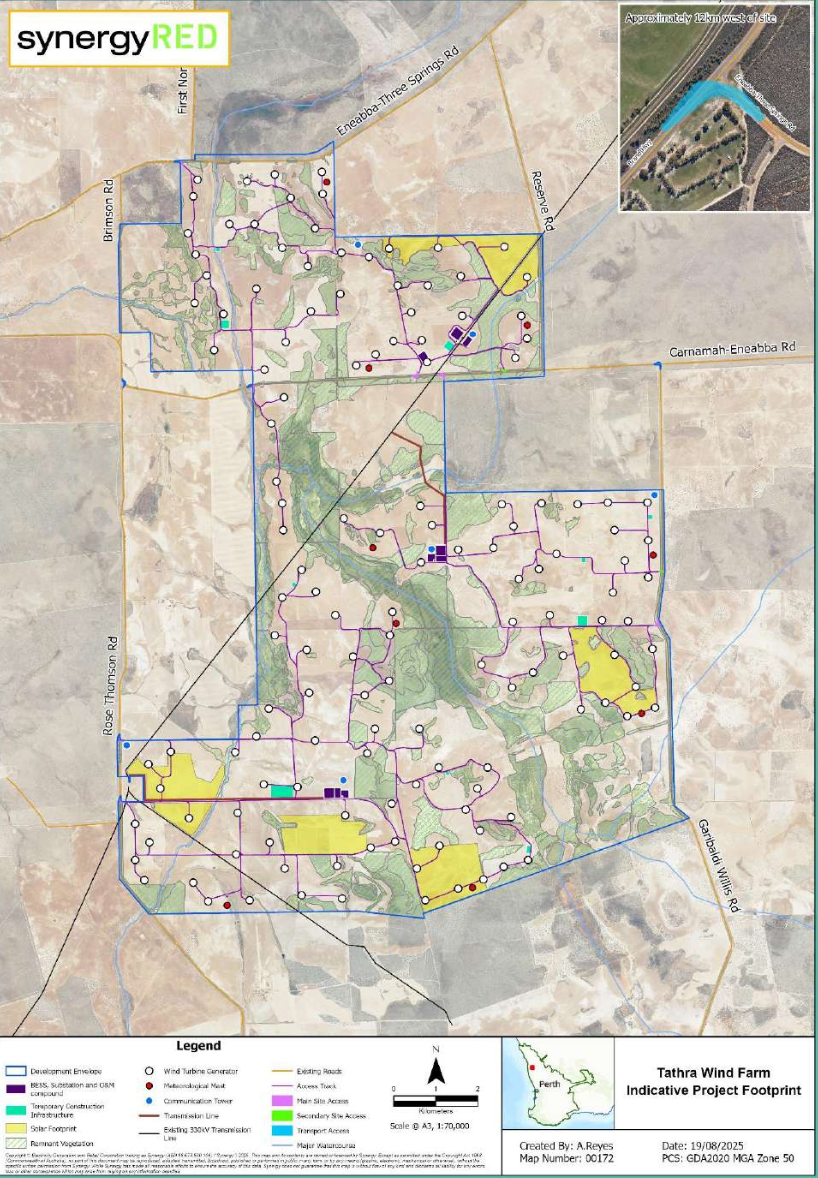
The Tathra Wind Farm could have up to 140 wind turbines with a maximum capacity of 1000 megawatts, solar panels generating 500 megawatts, and batteries to store 500 megawatts, according to a planning application released for comment by the Shire of Carnamah in mid-September.
The combination of wind, solar, and batteries would allow Synergy to maximise the utilisation of the nearby Eneabba to Three Springs 330 kilovolt transmission line's capacity.
The wind farm would span 158 square kilometres of land across nine farms, whose owners have consented to the development application. The facilities would use about ten per cent of the land.
The tips of the wind turbine blades could reach up to 250m above the ground, the same height as Central Park in Perth, where Rio Tinto is based.
Synergy plans to build Tathra, which it estimated will cost $4.5 billion, in stages. If full capacity is reached, it will be by far the biggest wind farm in WA.
In the meantime, that title will soon belong to nearby Warradarge Wind Farm, which will generate 283 megawatts once the $400 million installation of an additional 30 turbines to add 103 megawatts of generating capacity is completed in 2027.
The Warrdarge expansion will help Synergy replace the generation capacity it will lose when its Collie coal-fired power station closes in 2027. The utility will close its last coal-fired power station, Muja, in 2029.
Synergy would have to develop Tathra extraordinarily quickly for it to be operating before Muja closes.
 Peter Milne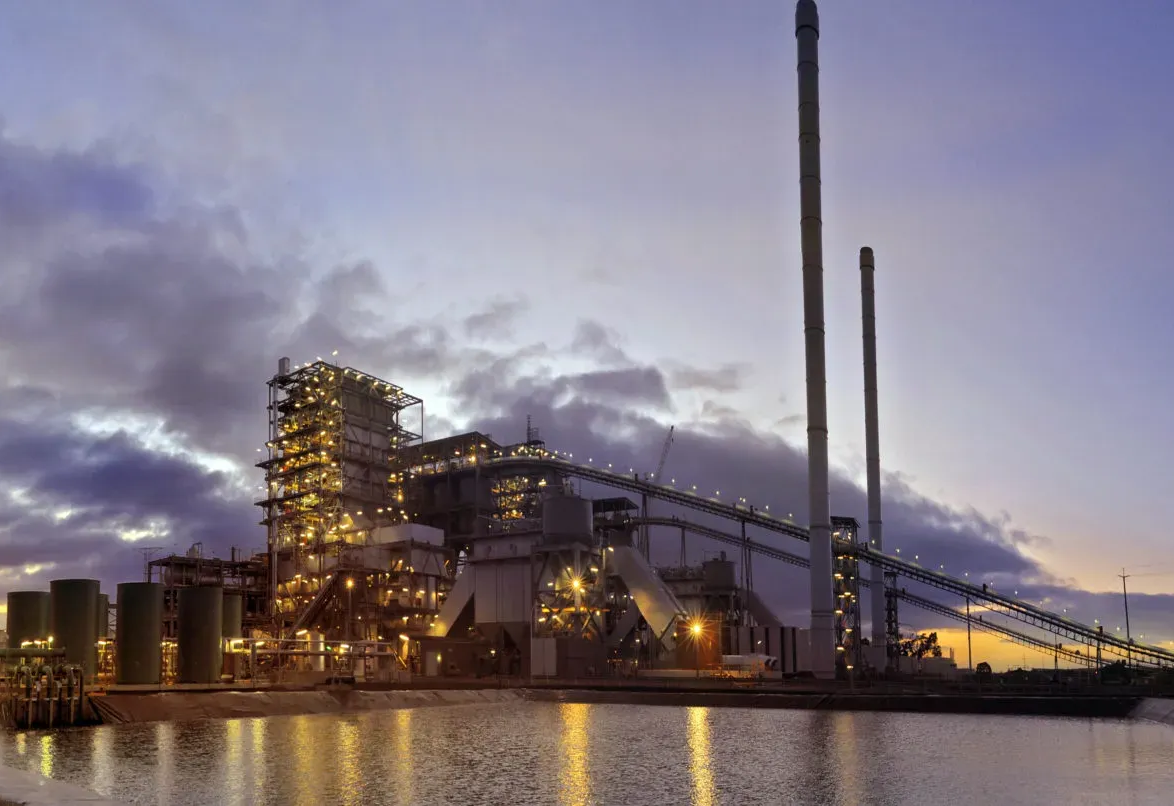
Up to one million solar panels will be needed to generate 500 megawatts of electricity. They will be mounted on a tracking system to follow the sun and may be "bi-facial," allowing light reflected off the ground to be used.
The panels will be installed in areas the farmers identified as of low agricultural value, and Synergy will consider designs that allow sheep to graze between the panels.
Synergy declined to comment.

The half-sized project in WA's North West will now pursue power sales to Pilbara miners and data centres and the production of green ammonia off-site.

South West WA's power grid reached a record 91 per cent peak renewable energy share in December - driven by 1,225 MW of new battery storage - while wholesale power prices fell 13 per cent and carbon emissions dropped 15 per cent as coal and gas generation declined.

The operator of South West WA's power grid needs insolvent Griffin Coal to keep supplying a vital power station, but if the WA Government won't keep it going, who will?

Andrew Forrest's miner is back to the drawing board to find a new solution that does not disrupt production and can be delivered by 2030.
Every story straight to your inbox and the occasional round up of info and comment.