Santos' decommissioning liability matches a quarter of its $22b value, but its disclosures to investors fared poorly against the latest accounting standards, according to an international survey.
Investors beware: after spending more than $40 million in the Canning Basin, the US-owned company's continued pursuit of remote gas appears to be throwing good money after bad.
WA environmental watchdog backs Kimberley fracking
The green light for Black Mountain Energy comes just months after Federal experts said its environmental risk assessment was "limited and disjointed" and reached "largely unsupported" conclusions.
Project Valhalla Key Facts 📍 Location: EP371 permit, Canning Basin, Kimberley, WA. 🏢 Company: unlisted Black Mountain Energy ⛽ Initial scale: 20 exploration/appraisal wells, up to 4000m deep 💧 Water: 100 million litres per well (mixed with chemicals) 🚰 Risk: Mount Hardman Creek flows into Fitzroy River 🦎 At-risk species: Northern Blue-tongued Skink, Greater Bilby ✅ WA: EPA recommendation Jan 2026, appeals and Minister's decison to follow ❓Federal: Assessment ongoing (EPBC Act)
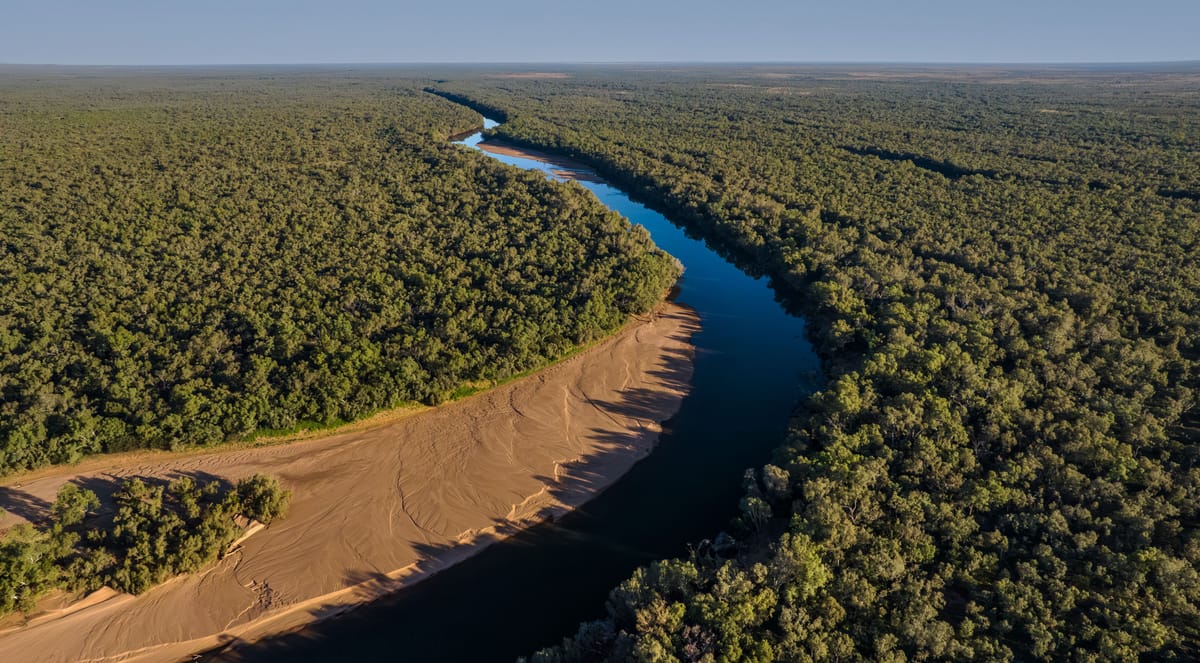
The WA Environmental Protection Authority has approved Black Mountain Energy's controversial plan to drill and hydraulically fracture 20 gas wells in the Canning Basin, 16 kilometers from the Fitzroy River—a decision that came just three months after independent federal scientists found the company's environmental risk assessment "limited and disjointed" with "largely unsupported" conclusions.
The January 20 EPA decision marks the first major fracking approval in the Kimberley since the McGowan government lifted its complete moratorium in 2018.
The US-owned company that had less than $5 million in the bank in mid-2025 plans to drill up to 20 wells 16km from the Fitzroy River in search of commercial quantities of gas, up to 4000m below ground.
EPA chair Darren Walsh said he was satisfied that environmental risks were low from the proposal, which allowed for exploration for and appraisal of gas reserves but not for the production of the fuel.
Walsh said protecting groundwater was critical, and he recommended that Black Mountain be required to conduct additional studies before drilling begins.
Black Mountain Energy (BME) executive chairman Rhett Bennett said the recommendation was encouraging.
"I remain a strong believer in the vast resource development opportunity that exists in our EP371 permit in the Canning Basin," he said.
The EPA has recommended that if oil and gas activity grows in the Canning Basin, a study be done to assess the cumulative impact on the region.
Kimberley green group shocked by EPA approval
Environs Kimberley director Martin Pritchard said he was shocked by the EPA's decision.
“Fracking would pollute the water that sustains life in the Kimberley and threaten rare and endangered wildlife as well as the National Heritage listed Martuwarra Fitzroy River," he said.
"Premier Roger Cook needs to step in and protect the Kimberley from this polluting, damaging industry before it's too late."
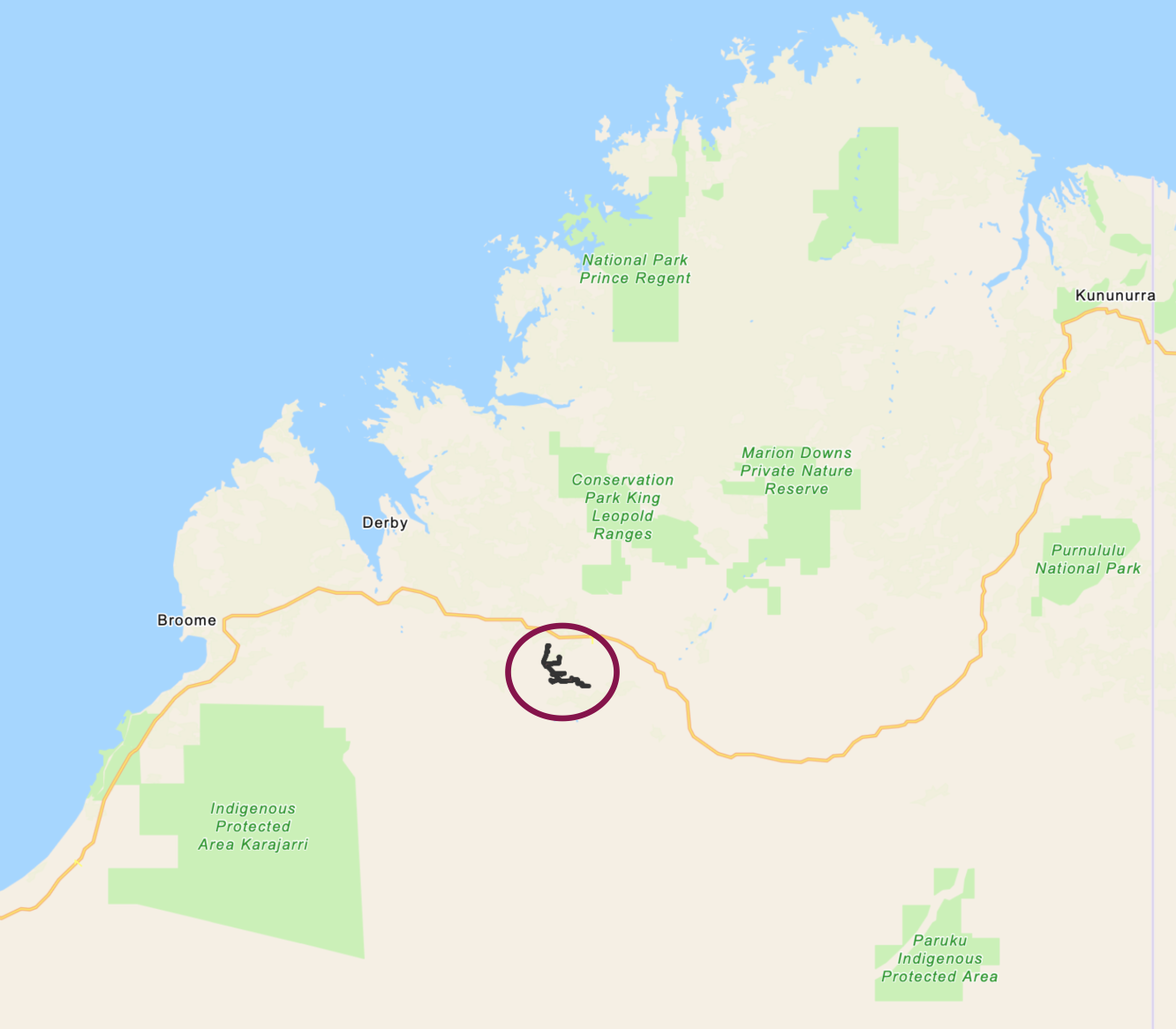
Black Mountain's proposed development (circled). Image DCCEEW EPBC Public Portal
The vote does not bind the parliamentary party, but is politically awkward for Environment Minister Matthew Swinbourn, who will make the final decision for the state after an appeals process likely to attract considerable public input.
The drilling campaign, green-lit by the EPA on Tuesday, will allow BME to better understand the gas resources in its Canning Basin permit. If successful, hundreds more wells, requiring further approval, could supply large quantities of gas.
BME could export the gas through Woodside's underutilised North West Shelf gas export plant, as in 2023 the WA Labor government exempted the Canning Basin from its ban on the export of onshore gas.
The plan only works if there is enough gas and long-term demand certainty to justify building a 1000 km pipeline from the Kimberley to the Pilbara.
Federal experts doubt Black Mountain's environmental work
A report published in December by independent scientists advising the Federal Government, which also needs to approve what BME calls Project Valhalla, damned the company's environmental risk assessment.
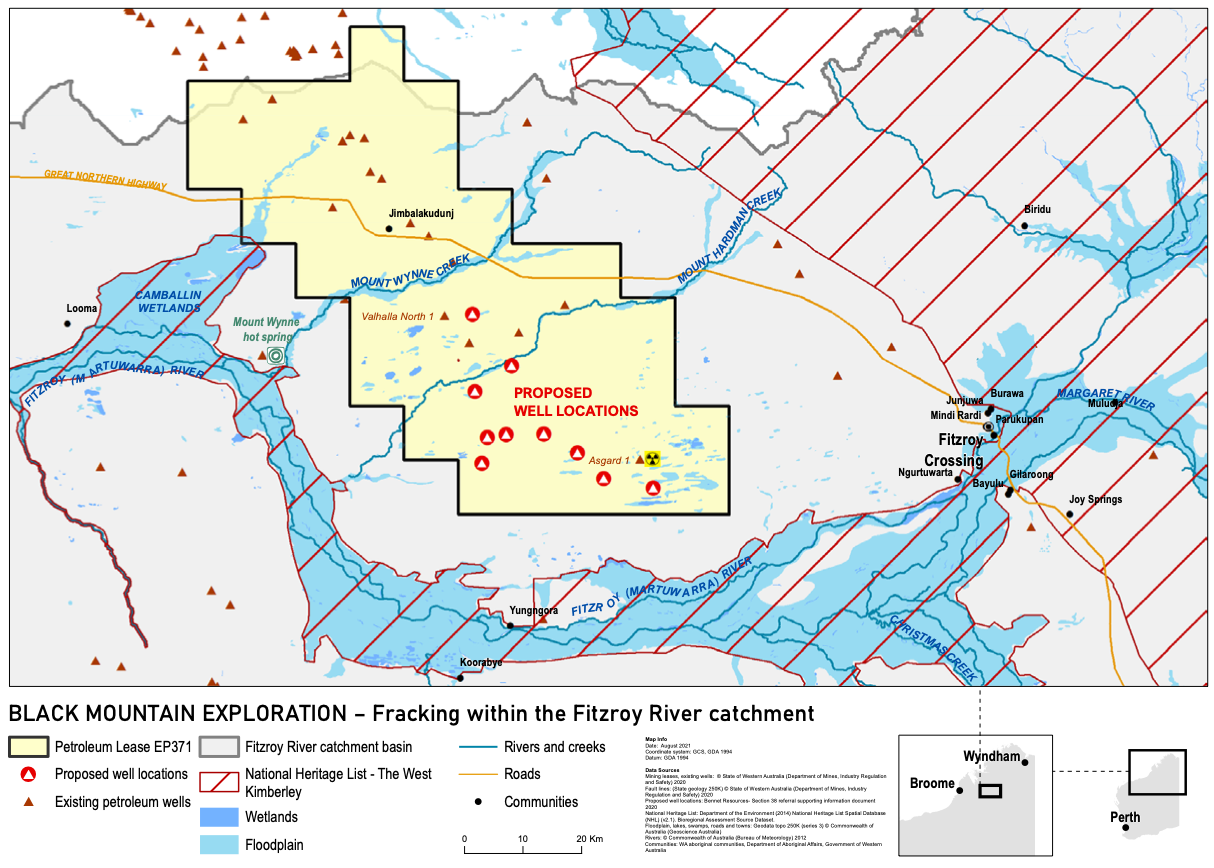
Mount Hardman Creek runs through the project area into the Fitzroy River. Map: Environs Kimberley
The Independent Expert Scientific Committee on Unconventional Gas Development (IESC) said BME conducted a "limited and disjointed" assessment of the risk to water resources posed by its planned drilling and reached "largely unsupported" conclusions.
The wells, located in the catchment for the Fitzroy River, will each require 100 million litres of underground water, mixed with chemicals, to be injected at high pressure to fracture the rock and allow gas to flow to the surface more freely.
The IESC rejected Black Mountain's conclusion that Mount Hardman Creek, which runs through the drilling area and into the Fitzroy River, would not be affected by the drilling.
The EPA's assessment acknowledged that the IESC had identified uncertainties and knowledge gaps in BME's environmental work but concluded it had sufficient information to assess the proposal.
The Federal Department of Climate Change, Energy, the Environment and Water (DCCEEW) was concerned about Project Valhalla even before it received the independent scientists' view.
The Department concluded the drilling was “likely to have a significant impact” on the critically endangered Northern Blue-tongued Skink and the vulnerable Greater Bilby and Largetooth Sawfish, the largest freshwater fish in Australia.
In March 2025, DCCEEW requested that BME provide a long list of additional information it needed to properly assess risks from the drilling.
On Monday, a DCCEEW spokeswoman said it was assessing the information to determine if it was adequate, at which stage it would be published for public comment.
Who is Black Mountain Energy?
BME, run by Texan Rhett Bennett, entered the Kimberley by buying petroleum titles from the Japanese giant Mitsubishi.
The oil and gas potential of the Canning Basin attracted major international companies, but they all left disappointed, selling out to smaller companies.
Hess departed in 2012, followed by ConocoPhillips two years later. Mitsubishi sold out in 2019, and Andrew Forrest’s Squadron Energy departed in 2021, then Origin left in 2022.
The majors had been put off by the high costs of operating in an area remote even by the standards of WA’s resources sector. The distance to any sizable gas market was another major impediment.
BME listed on the ASX in 2021, raising $11 million at 20 cents a share, leaving Rhett Bennett with a 78 per cent stake.
Investors lost from day one, with shares trading between 12 and 15 cents for a few months before sitting at about two cents for most of 2023.
The standing of the new company was not helped by the corporate regulator, ASIC, issuing it three infringement noticesin 2022 for greenwashing.
“BME had no credible basis for asserting that the natural gas it produced would be carbon neutral,” was one of ASIC’s concerns.
BME paid almost $40,000 for the infringements, an action that is not an admission of guilt.
The company briefly considered running computer servers in the remote outback to mine cryptocurrencies using power generated by its gas.
In September 2022, it told investors that environmental permitting was two-thirds complete, and it expected formal approval by mid-2023.
In late 2023, the board called it quits, recommending the company withdraw from the stock exchange.
The board argued that after spending more than $40 million on what it dubbed Project Valhalla and having $7.5 million of cash, a market capitalisation of $8.8 million “places no value on the Company’s assets.”
Today, BME is an unlisted public company with $4.8 million in cash as of June 30 2025, according to its half-yearly report lodged with ASIC, which revealed a $809,000 cash burn over six months.
UPDATE:
20 January 1:45: Comments from various parties and material from the EPA assessment report added.
I worked in oil & gas in commercial and engineering roles for 20 years. Since 2016, I have written for The West Australian, WAtoday, The Guardian and Boiling Cold, winning five WA Media Awards.
Investors beware: after spending more than $40 million in the Canning Basin, the US-owned company's continued pursuit of remote gas appears to be throwing good money after bad.
Chief executive Bill Oplinger told Wall Street the miner had responded to all 60,000 comments on its WA expansion plans—in fact, it responded to fewer than 10, and some were unacceptable.
The WA government will soon decide whether Black Mountain Energy can frack 20 wells near the Kimberley's Fitzroy River, but promised measures to protect the environment and the rights of local people are not yet in place.