

Government's Northern Endeavour oil vessel cleanup set to exceed $2b
Woodside sold the project to an insubstantial company to avoid a few hundred million in decommissioning costs: now it and its competitors will pay the price.
Woodside sold the project to an insubstantial company to avoid a few hundred million in decommissioning costs: now it and its competitors will pay the price.

The US-owned company is seeking funds from investors to stay a going concern while it awaits state and Federal approval.
WA Premier Mark McGowan warned Alcoa to lift its game or face curtailed mining, but his successor Roger Cook slashed water supply protections after a possibly empty threat from the US miner.
Two new wind farms and surging rooftop solar installation has pushed renewable energy to 35% of South West WA's power in October, mainly at the expense of coal.

South West WA received 35 per cent of its power from renewable energy in October, up from 25 per cent a year ago, due to two new wind farms and continued installation of rooftop solar panels.
The new Yandin and Warradarge wind farms in the Mid-West pushed wind’s share of generation from 12 to 17 per cent, to overtake rooftop solar panels that rose from 13 to 16 per cent.
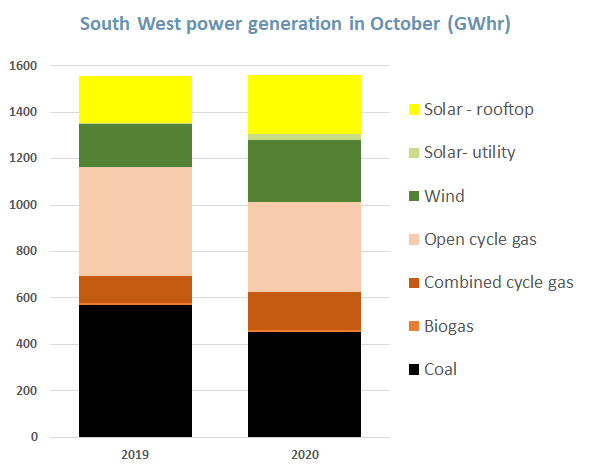
Collie’s coal-fired power stations produced 29 per cent of the power consumed on the South West Interconnected System in October 2020, a massive cut from 37 per cent in 2019.
Coal-fired output dropped by more than a fifth, an indication of the immense financial pressure facing the town’s two privately-owned coal mines and the Bluewaters Power station.
 Peter Milne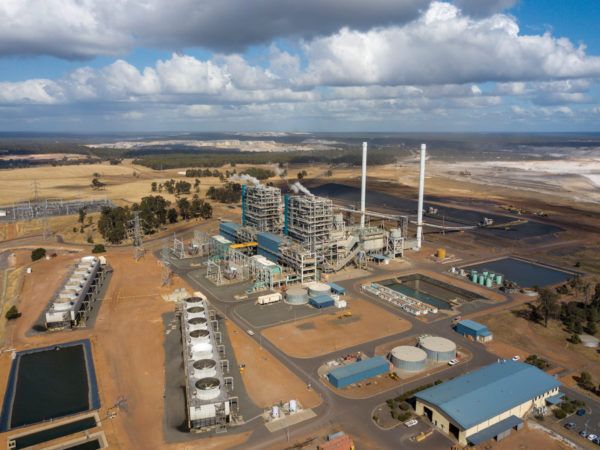
Gas is now the dominant fossil fuel burnt to generate power, with 35 per cent of the market, but still lost 2 per cent of the market year on year due to the surge in renewable energy.
The 212-megawatt Yandin wind farm has generated power since July.
Warradarge started in August but only connected its full 180 MW in late October, indicating that future years could see a more power generated by wind in October.
Peter Milne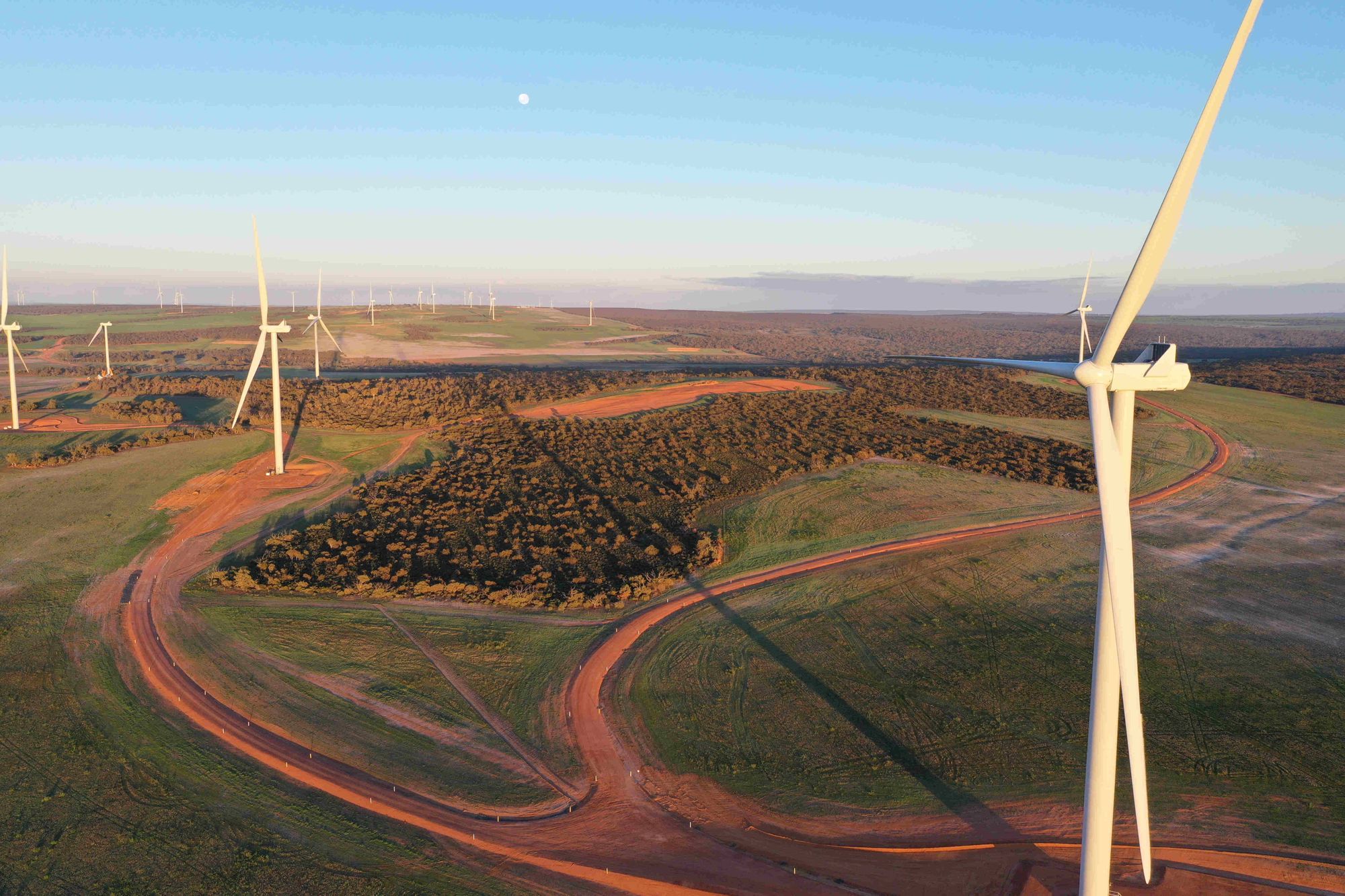
The data comes from OpenNEM, a platform that just extended its coverage to WA and, unlike market operator AEMO, includes generation from rooftop solar.
Main image: Warradarge wind farm. Source: Synergy

The half-sized project in WA's North West will now pursue power sales to Pilbara miners and data centres and the production of green ammonia off-site.

South West WA's power grid reached a record 91 per cent peak renewable energy share in December - driven by 1,225 MW of new battery storage - while wholesale power prices fell 13 per cent and carbon emissions dropped 15 per cent as coal and gas generation declined.

The state-owned utility needs to replace the generation capacity it will lose by closing down all its coal-fired power stations over the next four years.

The operator of South West WA's power grid needs insolvent Griffin Coal to keep supplying a vital power station, but if the WA Government won't keep it going, who will?
Every story straight to your inbox and the occasional round up of info and comment.