

Government's Northern Endeavour oil vessel cleanup set to exceed $2b
Woodside sold the project to an insubstantial company to avoid a few hundred million in decommissioning costs: now it and its competitors will pay the price.
Woodside sold the project to an insubstantial company to avoid a few hundred million in decommissioning costs: now it and its competitors will pay the price.

The US-owned company is seeking funds from investors to stay a going concern while it awaits state and Federal approval.
WA Premier Mark McGowan warned Alcoa to lift its game or face curtailed mining, but his successor Roger Cook slashed water supply protections after a possibly empty threat from the US miner.
Pilot Energy and Triangle Energy - two listed minnows with no revenue - may struggle to afford to decommission the Cliff Head platform off the WA coast.

ASX-listed Pilot Energy called in administrators on Tuesday, casting doubt on its plans to use the shuttered Cliff Head oil platform off the WA coast for carbon storage. This would leave the Australian Government with a $200 million clean-up bill that it has said will be borne by the oil and gas industry.
However, federal taxpayers may not see any reward for a $6.5 million grant awarded to Pilot to investigate carbon capture technologies.
The voluntary administrators from Cor Cordis will, among other things, revisit a much-delayed deal for Pilot to buy the 79 per cent of Cliff Head it does not own from fellow ASX minnow Triangle Energy.
Pilot has been in a trading halt for more than three months while its board "worked tirelessly" but ultimately failed to secure funding or a partner for the carbon storage project.
After trading closed on Tuesday the ASX suspended Pilot as its "financial condition is not adequate to warrrant the continued quotation of its securities."
Triangle went into a trading halt early on Tuesday that will remain in place until it can update the market on the Cliff Head sale.
If one partner in an offshore joint venture fails financially, legislation makes remaining owners fully liable for decommissioning costs.
Pilot ($7 million) and Triangle ($2 million) are together valued at less than five per cent of the cost of decommissioning the platform that last produced oil in 2024.
In 2025, the Department of Industry, Science and Resources released a report estimating that the offshore oil and gas industry faces a $44 billion bill to 2070 to remove its infrastructure from Commonwealth waters. The report by engineering consultancy Xodus estimated the bill for the Perth Basin, where Cliff Head is the only offshore facility, at $200 million.
Neither Pilot or Triangle acknowledges any decommissioning liability on its books for the facility 11km off the coast near Dongara in WA's Mid West. In May, corporate regulator ASIC announced it would review the disclosures of companies with liability for decommissioning and site restoration.
 Peter Milne
Cliff Head may be a rerun of the Northern Endeavour, whose owner went into liquidation in 2020, leaving the Federal Government responsible for removing the ageing vessel and subsea equipment and permanently sealing the wells.
The then Coalition Government passed that cost onto offshore oil and gas producers in the form of a levy on production that, in its first three years, raised $1.16 billion.
Last year, Federal Minister for Resources Madeleine King told an energy conference in Perth that Labor would follow a similar approach if required.
"Decommissioning is and must always remain the responsibility of industry, King said.
"Taxpayers will never be left to foot the bill"
The Northern Endeavour bill is borne predominantly by gas exporters as their revenue is vastly greater than Australia's offshore oil fields.
A spokesman for King said the Government is aware that Pilot has entered administration and is working with the administrator.
"Titleholders are obligated by Australian law to pay all costs associated with decommissioning," he said.
"Insolvency does not excuse titleholders from decommissioning responsibilities and the Government will hold responsible titleholders and related parties accountable."
In 2024 offshore safety regulator NOPSEMA directed Triangle, as operator of Cliff Head, to make the wells safe and flush all pipleines when production stopped.
A spokeswoman for the regulator said this was done and Triangle has continued to manage the unmanned facility in a way to reduce risks to as low as reasonably practicable, including 24 hour a day monitoring.
"NOPSEMA continues to maintain active regulatory oversight and engagement with relevant duty holders as well as other government departments – even as circumstances evolve," she said.
Oil production at Cliff Head started in 2006, and ownership eventually ended up with Triangle Energy, which operated the field, and Pilot Energy.
In mid-2023, with production dwindling, Pilot agreed to buy Triangle's 79 per cent of Cliff Head to develop a carbon storage facility.
The deal for two cash payments totalling $7.5 million and a further $7.5 million in royalties if the project went ahead was expected to be completed by early 2024 but is still not done.
In mid-2024, a new deal resulted in Pilot having more time to pay but at a higher price, with Triangle first selling its interest in the Cliff Head onshore processing plant at Arrowsmith for $4.5 million to be paid by December 2024, with a later $4 million payment for the offshore well and platform.
In October 2024, Pilot Energy made some payments but after promised financing did not materialise reneged on payments due in December.
Managing director Conrad Todd said the company was "disappointed to announce that Pilot failed to meet the first payment deadline."
The open disagreement pushed the Triangle share price down by a third, and Pilot scrip plunged 50 per cent, tanking the value of the two companies to $8.4 million and $8.2 million, respectively.
Since then, the deal between the two parties has been revised numerous times.
 Peter Milne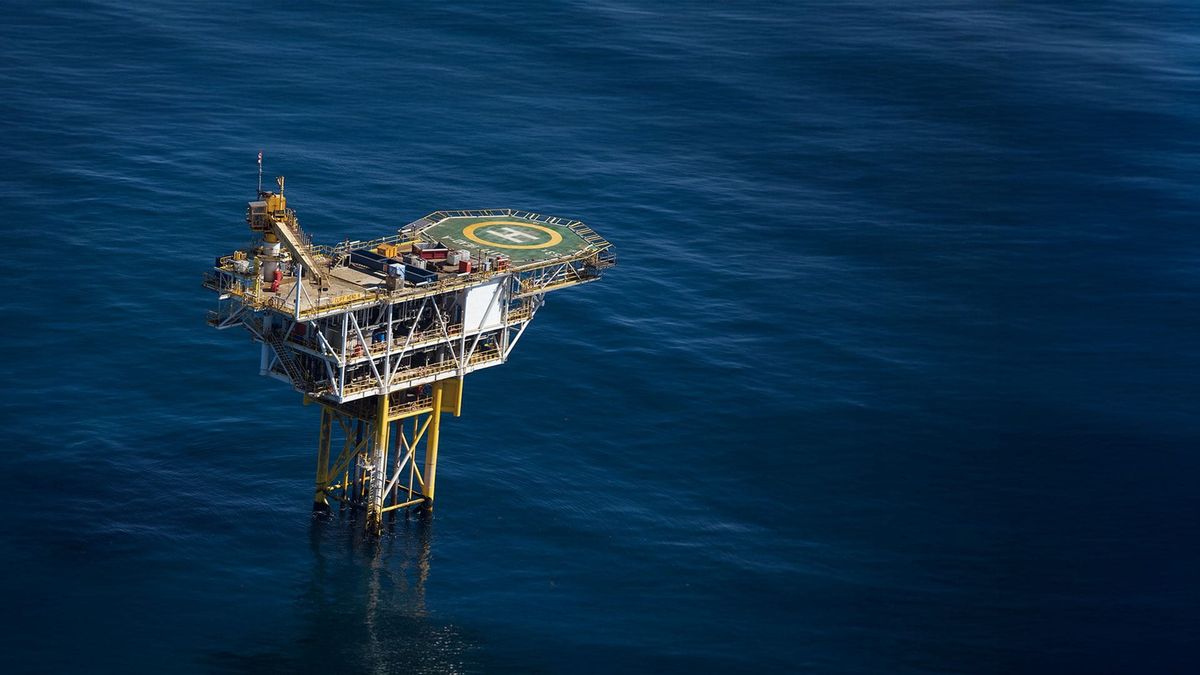
In June 2025, Pilot's half-year accounts reported that a "material uncertainty exists that may cast significant doubt on the consolidated entity’s ability to continue as a going concern."
Pilot's efforts to stay afloat include a $250,000 loan from Triangle that has not been repaid.
In late March, Pilot entered a trading halt to allow a "range of funding and strategic initiatives" to be executed, with trading expected to resume two days later. It never did.
Should Pilot's administrators not be able to revive the company, Triangle now has less assets to help pay the bill than a few months ago.
Its most valuable asset - acreage in the Philippines - was spun out into a new company called Tetragon Energy that started trading on the ASX last week.
The market values Tetragon, which is free of any liability for Cliff Head, at $10 million, compared to just $2 million for Triangle.

Woodside sold the project to an insubstantial company to avoid a few hundred million in decommissioning costs: now it and its competitors will pay the price.

The US-owned company is seeking funds from investors to stay a going concern while it awaits state and Federal approval.

UK-listed Georgina Energy plans to drill in the remote Little Great Sandy Desert in search of helium, hydrogen and natural gas.

The majority owner of the Cliff Head platform has called in administrators and other oil and gas producers will likely shoulder the cost.
Every story straight to your inbox and the occasional round up of info and comment.