

Doubling of mercury emissions from Alcoa Wagerup prompts appeals
"The government is allowing Alcoa to do whatever they friggin want," according to a long-term campaigner for better regulation of WA's alumina refineries.
"The government is allowing Alcoa to do whatever they friggin want," according to a long-term campaigner for better regulation of WA's alumina refineries.

Santos' $33 million of company tax in 10 years is less than one-thousandth of its Australian revenue, according to Market Forces.

Santos' Varanus Island is not producing gas. Nor are the shuttered North West Shelf and Wheatstone plants.
"The government is allowing Alcoa to do whatever they friggin want," according to a long-term campaigner for better regulation of WA's alumina refineries.

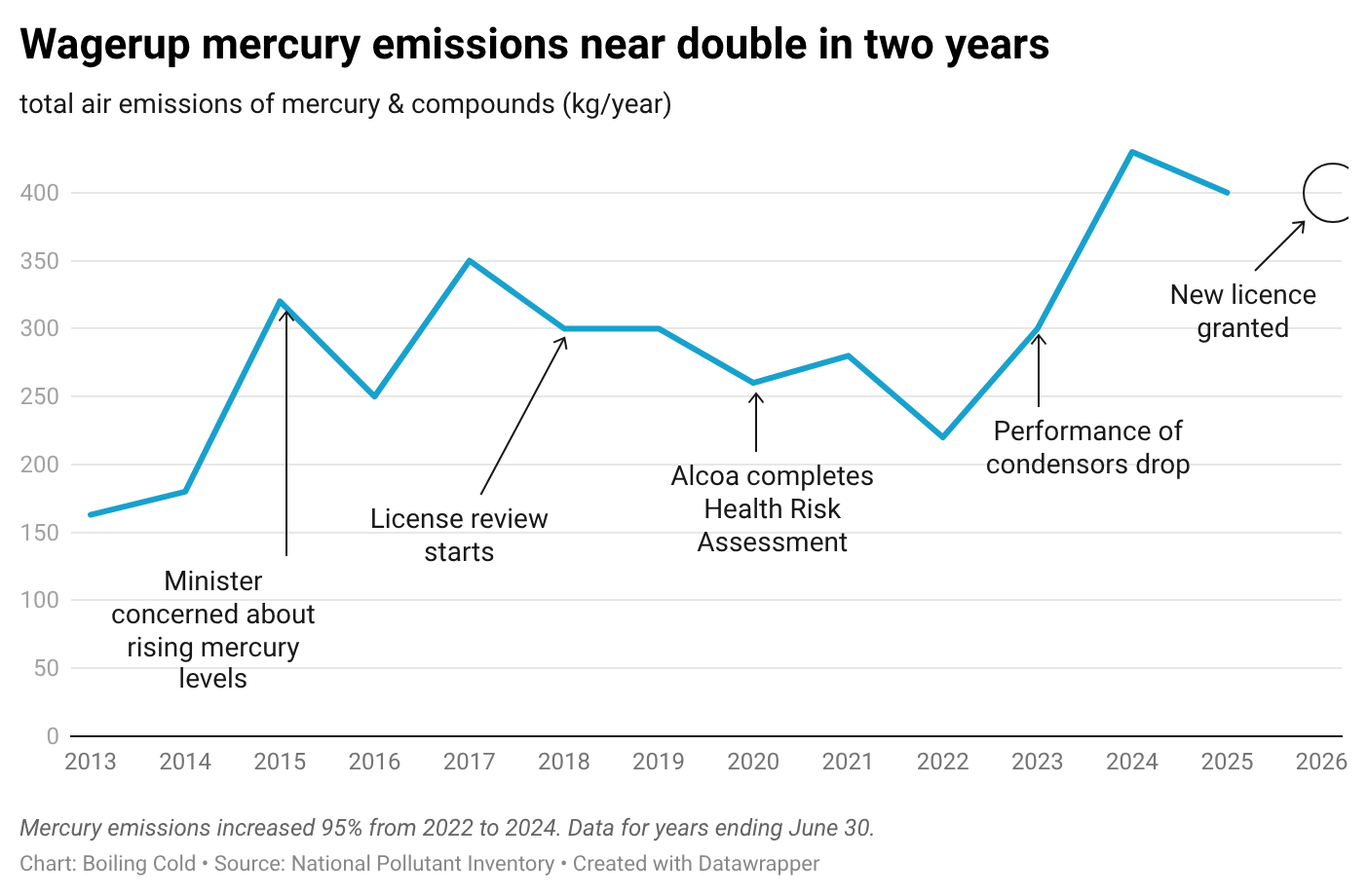
Environment and community groups have lodged appeals against a licence extension for Alcoa's Wagerup alumina refinery, where emissions of toxic mercury have nearly doubled over the past few years.
The concerns focus on the effect of mercury on wildlife, dust emissions, and inadequate monitoring of emissions.
The Conservation Council of WA (CCWA) has slammed as inadequate changes to Alcoa's licence conditions made by the WA Department of Water and Environmental Regulation (DWER), after an eight-year review that is not yet complete.
CCWA director Matt Roberts said it seems the WA environment regulator has taken no action while emissions of the toxic metal have grown substantially.
'This raises serious questions about our state regulator’s capacity to effectively hold the US-based miner to account,” Mr Roberts said.
An Alcoa spokesman said emissions have grown due to problems with condensers used to capture the toxic metal and variations in the mercury content of bauxite mined to feed the refinery, but remain within safe limits.
He said Alcoa expected to fix the problems in the condensers "in coming months."
For the past two years, about 70 per cent of the mercury in bauxite mined for Wagerup has been emitted into the atmosphere, according to data in the DWER report. A few years earlier, when condenser corrosion was less severe, just 40 per cent of the mercury escaped.
Roberts said nothing excused the ongoing release of mercury into the environment, with more than eight threatened species living within 2km of the refinery.
An Alcoa-commissioned health risk assessment (HRA) completed in 2020 concluded that emissions from the refinery, including mercury, presented a low risk to humans.
The Alcoa spokesman said the HRA methodology was robust and conservative. The company told DWER that ground-level mercury concentrations could increase 20-fold before there was a health risk.
However, Roberts is concerned that the effect of mercury on plants and wildlife has not been considered.
“Mercury is a dangerous neurotoxin which bioaccumulates in the environment," he said.
“The licence application provided no research on the mercury levels in the environment or in threatened species like the numbat, chuditch, western ringtail possum, the rainbow bee-eater, black cockatoos, and Carter’s freshwater mussel."
Boiling Cold asked Alcoa and DWER what had been done to show the mercury emissions were safe for non-human life.
The company did not respond.
A spokesman for the regulator said it would be inappropriate to comment as the licence extension it granted to Alcoa had been referred to the Office of the Appeals Convenor.
DWER also did not say why the first stage of its review of Alcoa's Wagerup license took eight years, or how long stage 2, which will consider water quality and volatile organic compound emissions, will take.
 Peter Milne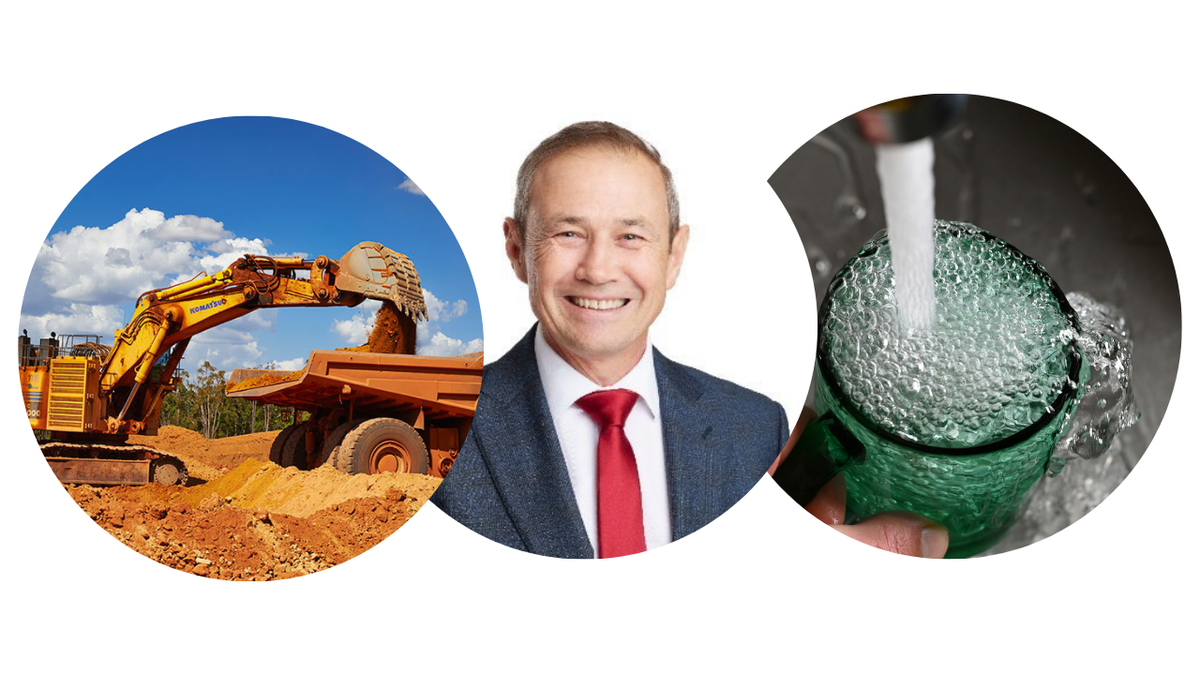
Emissions of ultrafine dust smaller than 2.5 millionths of a metre (PM2.5) from Wagerup have increased more than fourfold in the past decade, according to the DWER report.
Fine dust particles can be invisible, are readily inhaled, and are associated with a range of poor health outcomes.
Emissions of larger but still serious PM10 particles have almost doubled in 10 years.
However, Alcoa does not directly measure the total amount of PM2.5 and PM10 dust particles it emits; instead, it relies on calculations.
In its appeal, CCWA has called on DWER to explain how it concluded that just one PM2.5 monitoring station would be sufficient for the 2.9 million tonnes of aluminium produced annually at the refinery.
Boiling Cold's unrivalled reporting on Alcoa is free for all to read, maximising impact and accountability.
I need your backing to keep covering stories that would otherwise go unreported.
Another appeal against the extension of Wagerup's license is from the Community Alliance for Positive Solutions (CAPS).
CAPS chair Vince Puccio worked for Alcoa for 25 years and has campaigned for better regulation of WA's alumina refineries for three decades. He was born in Yarloop, a town south of the Wagerup refinery that is now partly abandoned due to dust and emissions from the refinery.
CAPS has never called for Wagerup to close, but it does want a significant change to how Alcoa manages dust and mercury, saying in its submission that many of DWER's conclusions are not soundly based in science.
"The government is allowing Alcoa to do whatever they friggin want," Pucio said.
"There needs to be a balance where industry, government, and community can work for the common good."
The Australian, US, and Japanese governments plan to produce the strategic rare earth metal gallium at the Wagerup refinery, which could make any restriction on its operation politically sensitive.
Federal Environment Minister Murray Watt relied on the proposed gallium plant to justify his February decision not to prosecute Alcoa for years of clearing jarrah forest without federal environmental approval.
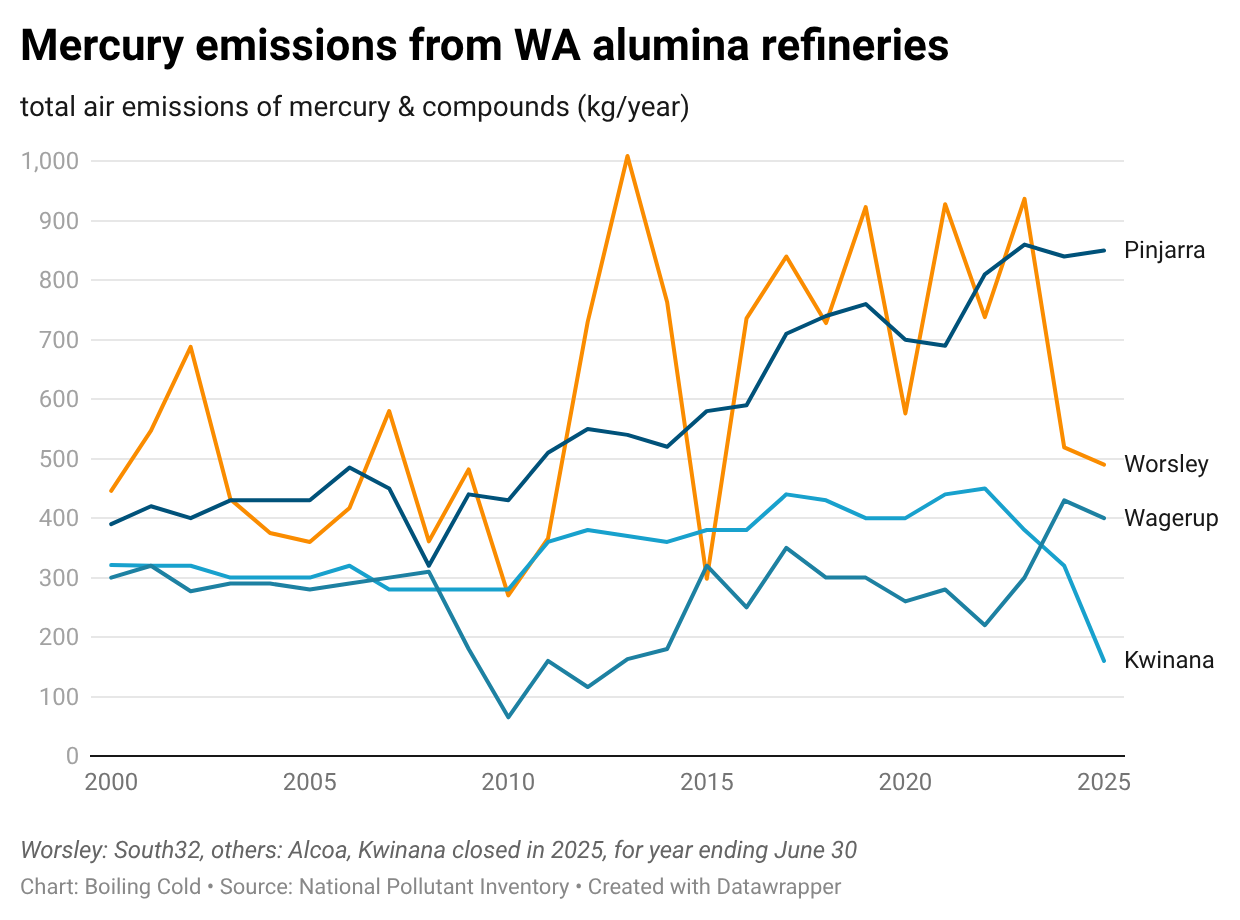
The three alumina refineries operating in WA's south-west all emit significant amounts of mercury. Alcoa closed the original Kwinana refinery in 2025.
Like Wagerup, emissions from Alcoa's 4.7 million tonnes a year Pinjarra refinery have grown steadily since about 2010. In 2025, it emitted 30 per cent more mercury per million tonnes of capacity than Wagerup.
South32's Worsley refinery had, until recently, pumped as much mercury into the atmosphere as Pinjarra.
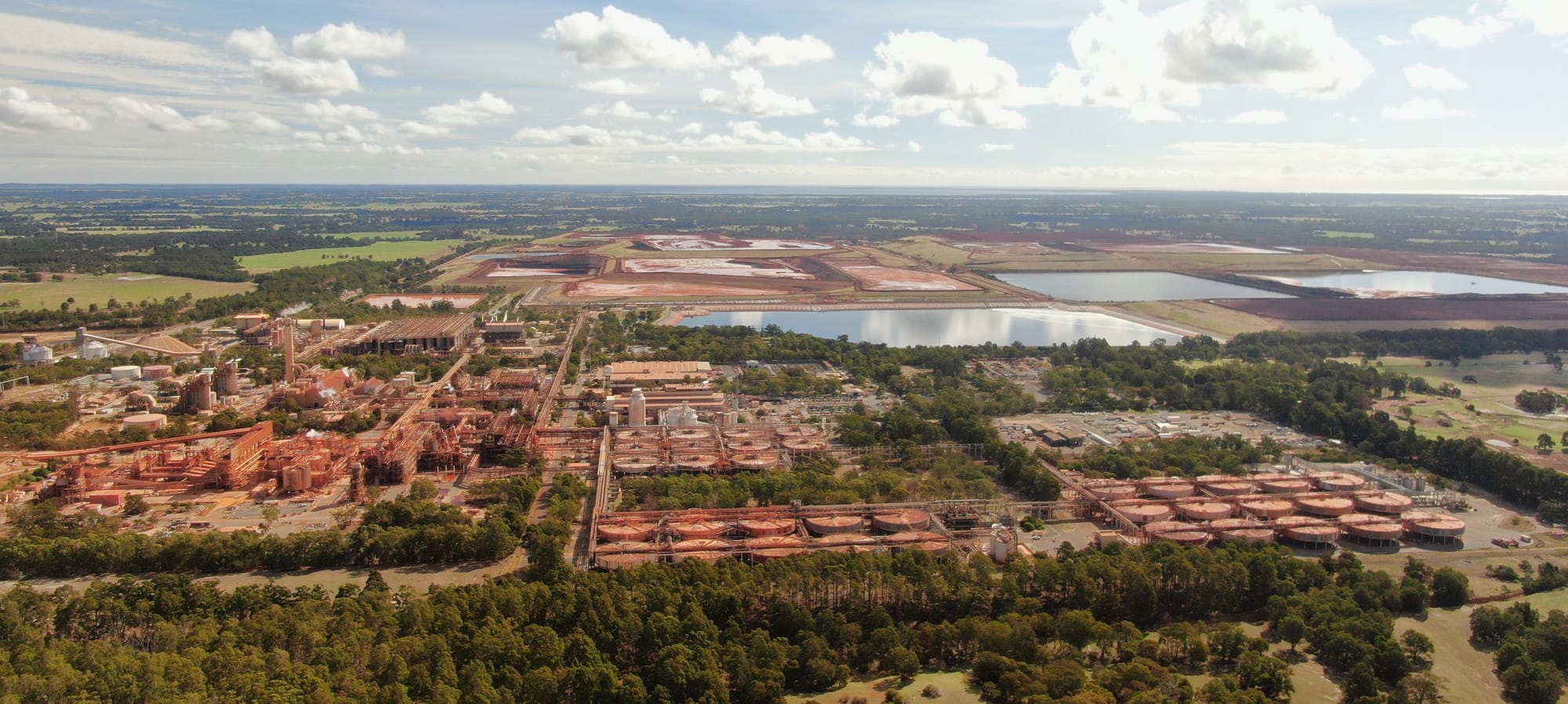
Mercury from Wagerup adds to a growing list of concerns about Alcoa's operation in WA, including threatening Perth's water supply and failing to complete the rehabilitation of a single hectare of strip-mined jarrah forest after more than six decades of mining.

The US miner illegally destroyed the habitat of endangered black cockatoos for six years.

Chief executive Bill Oplinger told Wall Street the miner had responded to all 60,000 comments on its WA expansion plans—in fact, it responded to fewer than 10, and some were unacceptable.

Alcoa chief executive Bill Oplinger told Wall Street the US aluminium specialist could take strong action to boost profits from alumina, most of which it refines in Western Australia.

If the US miner is found to have mined too close to a large jarrah tree, it would trigger an automatic cancellation of its right to mine much of its lease.
All the info and a bit of comment on WA energy, industry and climate every Friday