

Doubling of mercury emissions from Alcoa Wagerup prompts appeals
"The government is allowing Alcoa to do whatever they friggin want," according to a long-term campaigner for better regulation of WA's alumina refineries.
"The government is allowing Alcoa to do whatever they friggin want," according to a long-term campaigner for better regulation of WA's alumina refineries.

Santos' $33 million of company tax in 10 years is less than one-thousandth of its Australian revenue, according to Market Forces.

Santos' Varanus Island is not producing gas. Nor are the shuttered North West Shelf and Wheatstone plants.
Santos' decommissioning liability matches a quarter of its $22b value, but its disclosures to investors fared poorly against the latest accounting standards, according to an international survey.

ANALYSIS
Australia's oil and gas sector faces a $44 billion bill to clean up the ocean, with more to do onshore, but it badly lags the UK and Canada in revealing this liability to investors, according to international energy finance analysts Carbon Tracker.
Carbon Tracker examined how well 38 companies disclosed information about decommissioning liabilities, using 15 metrics that it considered the minimum disclosure required under updates to international accounting standards.
Australian companies, on average, disclosed just 19 per cent of the required metrics, less than half their foreign counterparts, the report released in December concluded.
"Investors in these companies have little to no insight into the extent of (decommissioning) liabilities ... and the potential impacts of the different risks and uncertainties."
Carbon Tracker on Australian oil and gas firms
Barbara Davidson, head of capital markets transparency at Carbon Tracker, said investors cannot understand the risks embedded in these long-term liabilities without transparent assumptions, payment schedules and sensitivities.
"Yet our findings also show that better disclosure is achievable," she said.
"As the energy transition accelerates, incomplete reporting leaves markets exposed to growing financial and regulatory risks.”
The poor level of disclosure is at odds with the importance of provisions for decommissioning (or restoration) in assessing a company's value.
The restoration provision for Santos, Australia's second-largest fossil fuel producer, is equivalent to a quarter of its current market value.
For smaller firms, Beach and Amplitude, the liability is equal to 44 per cent and 58 per cent of their value, respectively.
Carbon Tracker assessed the companies against new guidance issued by the International Accounting Standards Board in November.
In January, the Australian Accounting Standards Board moved to implement these changes by issuing new examples on how to disclose uncertainties in estimating decommissioning liabilities, to be applied for the 2025/26 financial year.
The revision promotes more detailed disclosure of assumptions about future uncertainties.
For decommissioning, it points to the need to detail liabilities far into the future if there is a risk, such as climate change, that they may occur sooner.
Investors need more granularity to assess if the risks associated with investing in oil and gas do not outweigh the promised returns.
The liability a company records on its balance sheet for decommissioning is driven by four factors: the amount of infrastructure it expects to remove, when it will be removed, the cost for that work, and the discount rate used to convert future expenditure to today's dollars.
All factors have room for legitimate variation in the estimate, but also ample opportunity to manipulate the recorded liability downward.
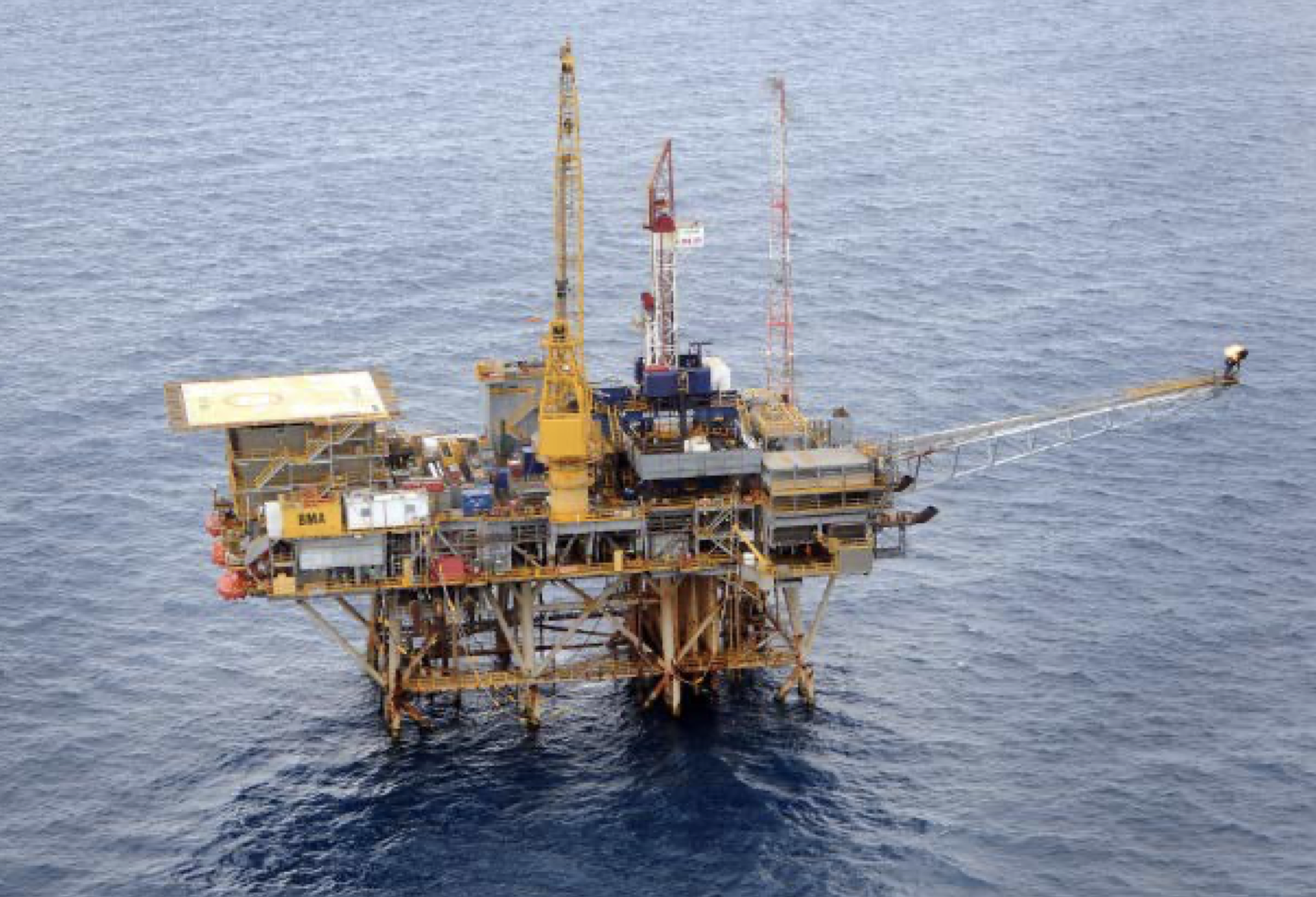
Carbon Tracker notes that Woodside, Santos, Beach, and Amplitude all assume their offshore pipelines can be left in situ: industry jargon for leaving them in the ocean. This is despite the federal regulator NOPSEMA's base case that all property is removed.
On costs, globally, oil and gas companies have a history of underestimating decommissioning costs, with a survey of projects in the UK North Sea revealing the true costs were, on average, 76 per cent higher than the estimates.
Locally, ExxonMobil appears to be an example of inadequate restoration provisions.
In 2019, the US major's accounts lodged with the Australian Securities and Investments Commission (ASIC) revealed a $1.94 billion provision for restoration, predominantly for its 50 per cent of the Bass Strait operation it owns with Woodside.
Now, despite spending nearly $1.5 billion for its share of Bass Strait work in recent years, it has a restoration provision of $3.6 billion.
Five years less discounting to today's dollars can account for only a small part of the reason why the liability increased by $1.7 billion after spending $1.5 billion.
Carbon Tracker said UK and Canadian regulators appeared to be more active in policing financial reporting than ASIC.
"Market regulator practice at a jurisdictional level may be a key driver in the quality of financial statement disclosures," Carbon Tracker concluded.
"Although ASIC has previously emphasised the importance of appropriate recognition and estimation of AROs, we did not observe the regulator compelling (or indeed companies providing) more useful financial statement disclosures."
Much decommissioning in Australia is occurring only after the federal regulator, NOPSEMA, ordered work to be done. Some of these projects are still required to publish annual progress reports.
Bass Strait - Victoria - ExxonMobil
Stybarrow - WA - Woodside
NOPSEMA direction 2025 superseded the original 2021 direction following "preventable safety incidents resulting in injury as well as delays."
Griffin - WA - Woodside
NOPSEMA direction 2025 superseded the original 2021 direction following "several preventable health, safety, and environmental incidents."
Minerva - Victoria - Woodside
NOPSEMA direction 2025 superseded the original 2021 direction after plastic was lost to the sea.
 Peter Milne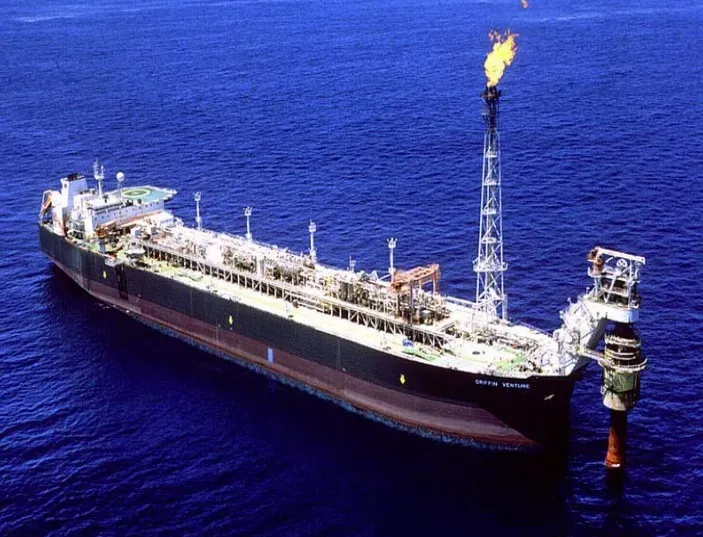
Nganhurra Riser Turret Mooring - WA - Woodside
Basker, Manta, Gummy - Victoria - Amplitude Energy

Santos' $33 million of company tax in 10 years is less than one-thousandth of its Australian revenue, according to Market Forces.

Santos' Varanus Island is not producing gas. Nor are the shuttered North West Shelf and Wheatstone plants.

As Asia scrambles for gas, another Australian gas export plant is out of action, and the WA Government monitors the situation to ensure sufficient fuel for the state.

The troubled $6 billion flagship will be out of action "for a number of weeks," just as Santos' customers are desperate for gas to replace supply from the Middle East.
All the info and a bit of comment on WA energy, industry and climate every Friday