

Roger Cook firms on WA gas for WA amidst global energy turmoil
With WA's days of cheap and abundant gas coming to a close, the chances of onshore gas being exported are shrinking fast.
With WA's days of cheap and abundant gas coming to a close, the chances of onshore gas being exported are shrinking fast.

No profit, falling production, inadequate maintenance, a safety plan in limbo and a big clean-up if exploration fails: challenges aplenty at the Canadian company's only offshore facility.
No profit, falling production, inadequate maintenance, a safety plan in limbo and a big clean-up if exploration fails: challenges aplenty at the Canadian company's only offshore facility.
South West WA's power grid reached a record 91 per cent peak renewable energy share in December - driven by 1,225 MW of new battery storage - while wholesale power prices fell 13 per cent and carbon emissions dropped 15 per cent as coal and gas generation declined.

South West Western Australia's electricity grid achieved 91 per cent renewable energy generation at midday on December 20, 2025: a record enabled by 1,225 megawatts of new battery storage commissioned since October 2024.
The milestone contributed to renewable energy supplying more than half (52 per cent) of the region's power over the December quarter for the first time, as gas-fired generation fell 16 per cent and coal generation dropped 6 per cent compared to the previous year, according to the Australian Energy Market Operator's (AEMO) quarterly report released Thursday.
The dramatic surge in renewable energy share from 45 per cent to 52 per cent in just 12 months was enabled by the startup of five grid-scale batteries in Collie and Kwinana since October 2024.
Just before noon on Saturday, 20 December, renewable energy provided 91 per cent of power on the South West Connected System (SWIS).
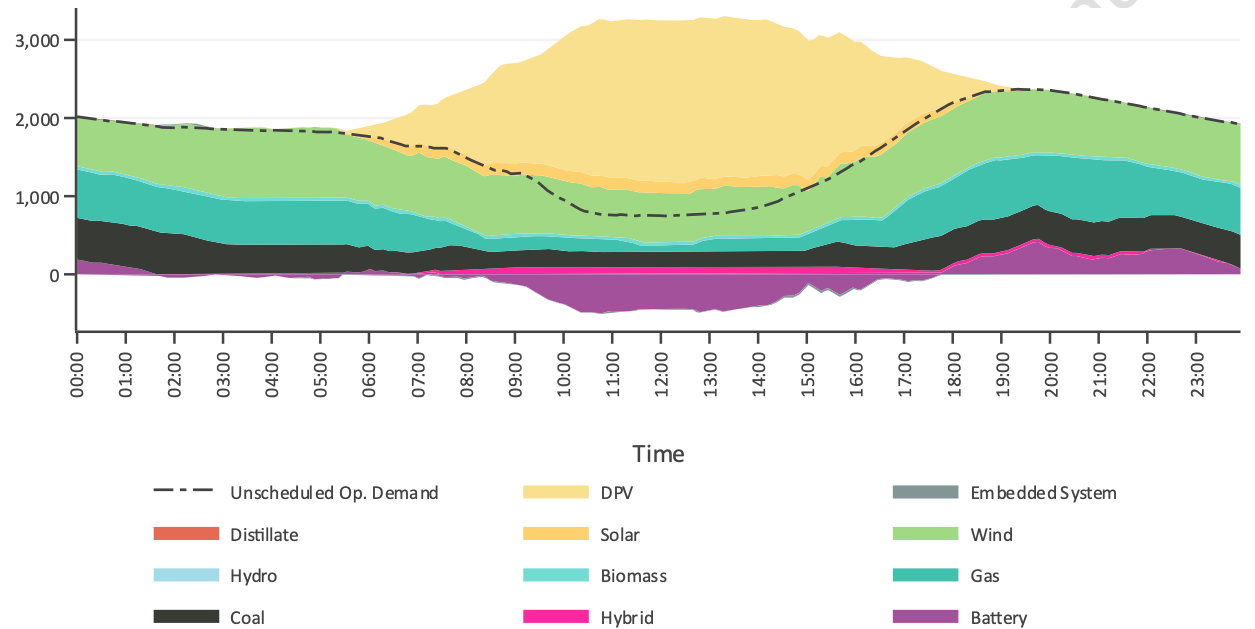
Sunny skies, high winds, more battery storage, unreliable coal-fired power generation and mild temperatures all contributed to the previous record of 85 per cent set a year before being smashed.
AEMO policy manager Violette Mouchaileh said increased renewable and battery generation on the SWIS - which stretches as far as Kalbarri and Kalgoorlie - contributed to a reduction in coal and gas‑fired output of six per cent and 16 per cent respectively.
"Greater renewable and storage output continued to place downward pressure on wholesale energy prices in WA, contributing to a 13 per cent fall to $69.55/MWh,” she said.
 Peter Milne
The price also varied much less throughout the day.
Batteries charging during the midday peak of solar power prevented prices from falling to extreme lows, while expensive gas lost market share in the evenings as the batteries discharged.
Households and small businesses in WA are not directly affected by the wholesale power price, as state-owned Synergy has the monopoly to supply them at prices set by the WA Government.
The use of gas in Australia's most gas-dependent state fell nine per cent in the December quarter compared with a year ago and was 16 per cent less than the preceding quarter.
This was partly due to a 16 per cent drop in gas-generated power as renewable energy gained market share throughout the day.
Acciona's Kwinana waste-to-energy plant started up in November after seven troubled years of construction, adding a new type of renewable power to the system.
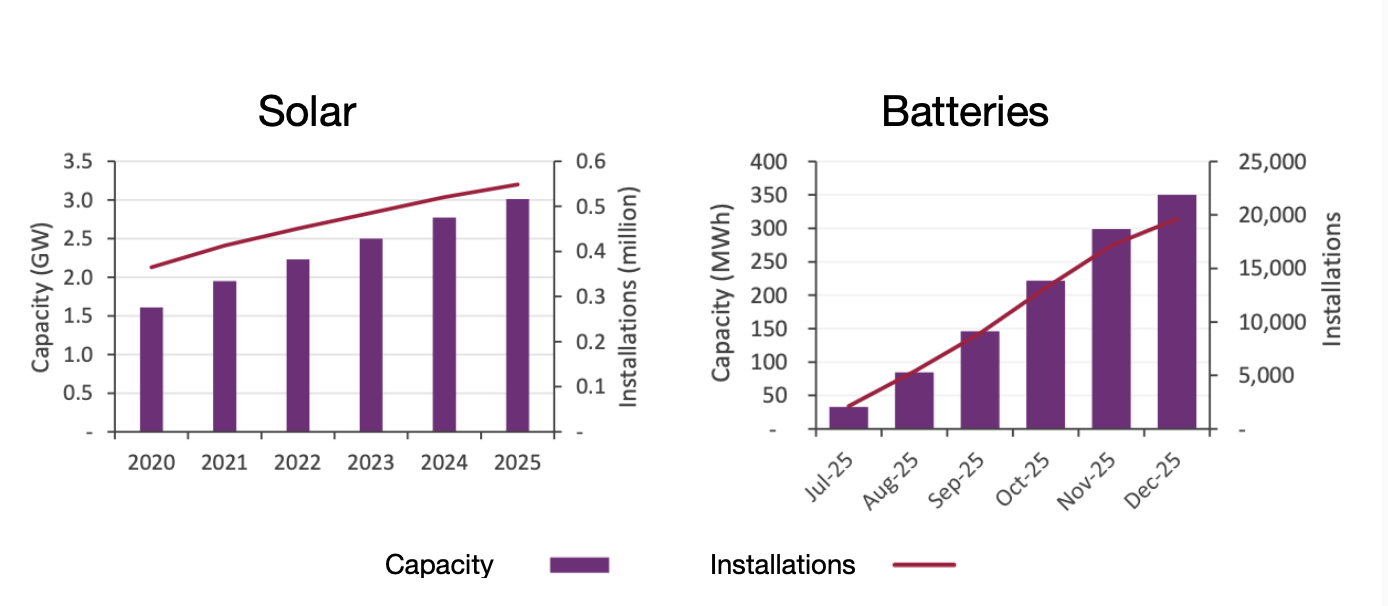
Household investment continued to add to WA's clean power capacity, with about 20,000 batteries installed in the last half of 2025, with uptake boosted by State and Federal subsidies.
On average, generating a megawatt-hour of power produced 0.43 tonnes of carbon pollution in the last quarter of 2025, 15 per cent less than a year before.


With WA's days of cheap and abundant gas coming to a close, the chances of onshore gas being exported are shrinking fast.

Australia's biggest oil and gas producer has posted record production and cut costs, but weak fossil fuel prices have weighed on profits


Investors beware: after spending more than $40 million in the Canning Basin, the US-owned company's continued pursuit of remote gas appears to be throwing good money after bad.

The WA government will soon decide whether Black Mountain Energy can frack 20 wells near the Kimberley's Fitzroy River, but promised measures to protect the environment and the rights of local people are not yet in place.
All the info and a bit of comment on WA energy, industry and climate every Friday